
Sudden hearing loss: treat the change as time-sensitive
Do not wait for a home wax treatment to explain an abrupt drop in hearing.
Act on the change you notice
A sudden reduction in hearing can be discovered on waking, during a phone call, or after an abrupt unusual sensation. The National Institute on Deafness and Other Communication Disorders describes sudden sensorineural hearing loss as a medical emergency and advises immediate medical evaluation. Do not assume a blocked feeling proves the cause is wax, congestion, or allergies. Contact an urgent medical service now and state clearly that the hearing change was sudden. If local access is confusing, ask the service where you should be assessed rather than accepting a routine appointment weeks away without explaining the timing.
Describe the onset accurately
Give the best estimate of when hearing was last normal and when you first noticed the change. Say whether one ear or both are affected and whether there is ringing, dizziness, fullness, injury, or another symptom. You do not need a decibel measurement before seeking help. A concise description might be: hearing was normal before bed; on waking this morning, speech through the left ear sounded much quieter. This is more useful than saying only that the ear feels strange. If speaking by phone is difficult, use text access or ask a trusted person to assist with contacting care.
Avoid delays disguised as tests
Do not spend the day comparing headphones, cleaning the canal, or increasing sound levels to measure how much hearing remains. An online test cannot establish the cause or replace an examination. Keep the ear free of improvised treatment while arranging assessment, and avoid driving if dizziness makes it unsafe. Bring a list of current medicines and relevant health history, including recent illness or trauma. The purpose of these details is to help the clinician assess the change quickly; collecting them should not postpone the call or journey to urgent care.
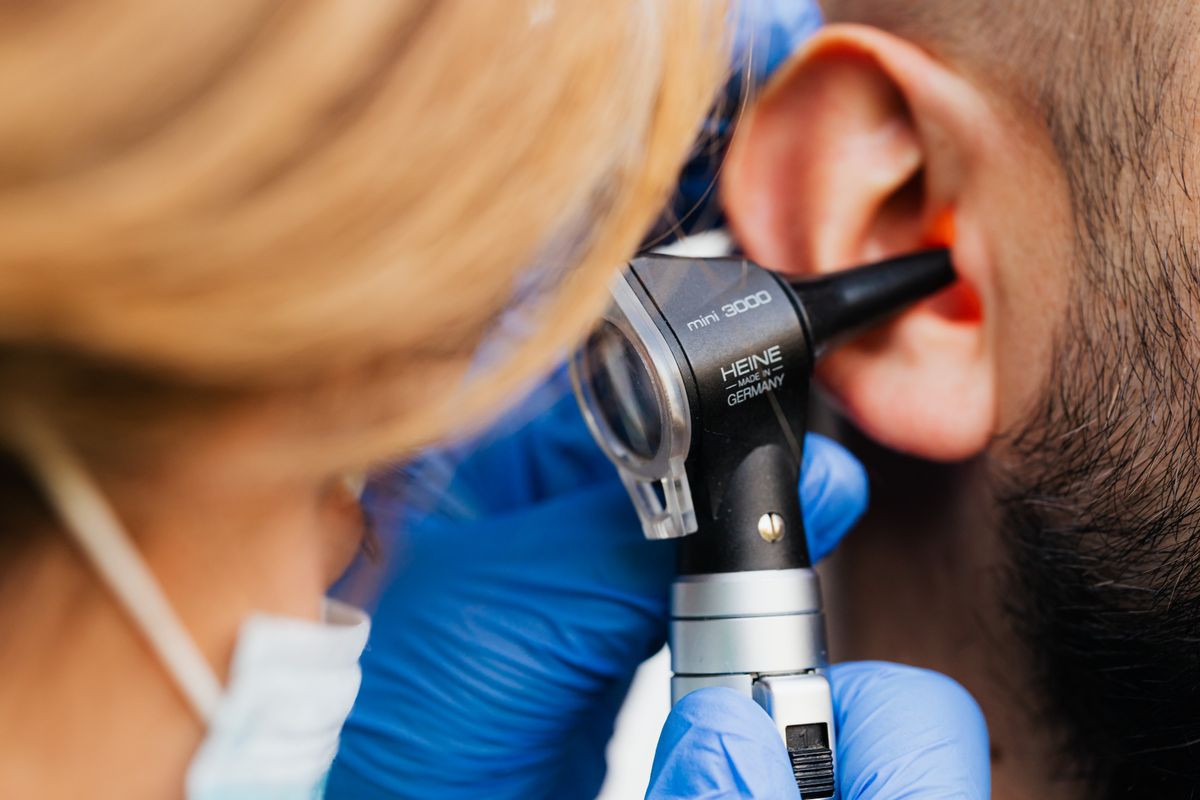
Expect an examination and hearing assessment
NIDCD explains that clinicians distinguish obstruction-related hearing loss from loss involving the inner ear, with audiometry important in evaluating a sudden change. The treatment decision belongs to the clinician and depends on the findings. Do not start or borrow medicines based on an article. Ask what the examination showed, what tests are planned, and how quickly follow-up should happen. If you are given instructions orally and cannot hear them clearly, request a written version or another accessible format. Confirm the plan in your own words before leaving so an important step is not lost in the conversation.
Keep the follow-up organized
Write down the diagnosis if one is established, the treatment plan, and the next appointment. Ask which changes should prompt another urgent contact. Keep records of hearing tests so future clinicians can compare them, but avoid treating a day of apparent improvement as a reason to cancel follow-up without advice. Arrange practical support for meetings, phone calls, and transport while the situation is being assessed. The essential action is prompt evaluation; the supporting tasks make that evaluation and subsequent care easier to complete without turning uncertainty into a prolonged wait at home.
Sources & further reading
Source links support the factual context. Practical examples and suggested workflows are original editorial guidance. Sources checked October 5, 2026.
Spotted something we should correct? Send a correction. Read our editorial policy.