A noisy workplace: ask for control measures and a fit check
Hearing protection works best within a broader plan that reduces noise at its source.
Describe the exposure through the proper route
If noise makes work difficult, report the task, equipment, location, and typical duration to the supervisor or safety professional. Avoid guessing a precise exposure level from how irritating the sound feels. NIOSH emphasizes reducing noise through engineering and administrative controls before relying only on personal protective equipment. Ask how the task has been assessed and what control measures are in place. A factual description such as repeated cutting work beside a running compressor is more useful than a general complaint that the workshop is loud. Keep the conversation focused on the job and supported protection.
Ask about reducing the source
Possible controls depend on the workplace and equipment, so discuss them with the responsible professional instead of modifying machinery yourself. Ask whether a quieter process, maintained equipment, enclosure, or different work arrangement has been considered. Do not remove guards or create an improvised sound barrier that affects ventilation or access. A worker may be able to identify where noise interferes with communication, while the employer's assessment determines suitable controls. Reducing exposure at its source can help everyone in the area rather than making each individual responsible for compensating with a device on their ears.
Get individual fitting instruction
NIOSH recommends individual instruction and fit testing to check that selected protection provides adequate reduction. Ask for a demonstration using the exact protector you will wear and the other equipment required by the task. Explain discomfort or difficulty inserting plugs instead of accepting a poor fit. If the test is inadequate, ask about further instruction or another suitable option. Reading a package label is not the same as confirming your fit. A documented fit check gives the safety team evidence about the person and product combination rather than relying only on a general rating.
Plan communication without removing protection
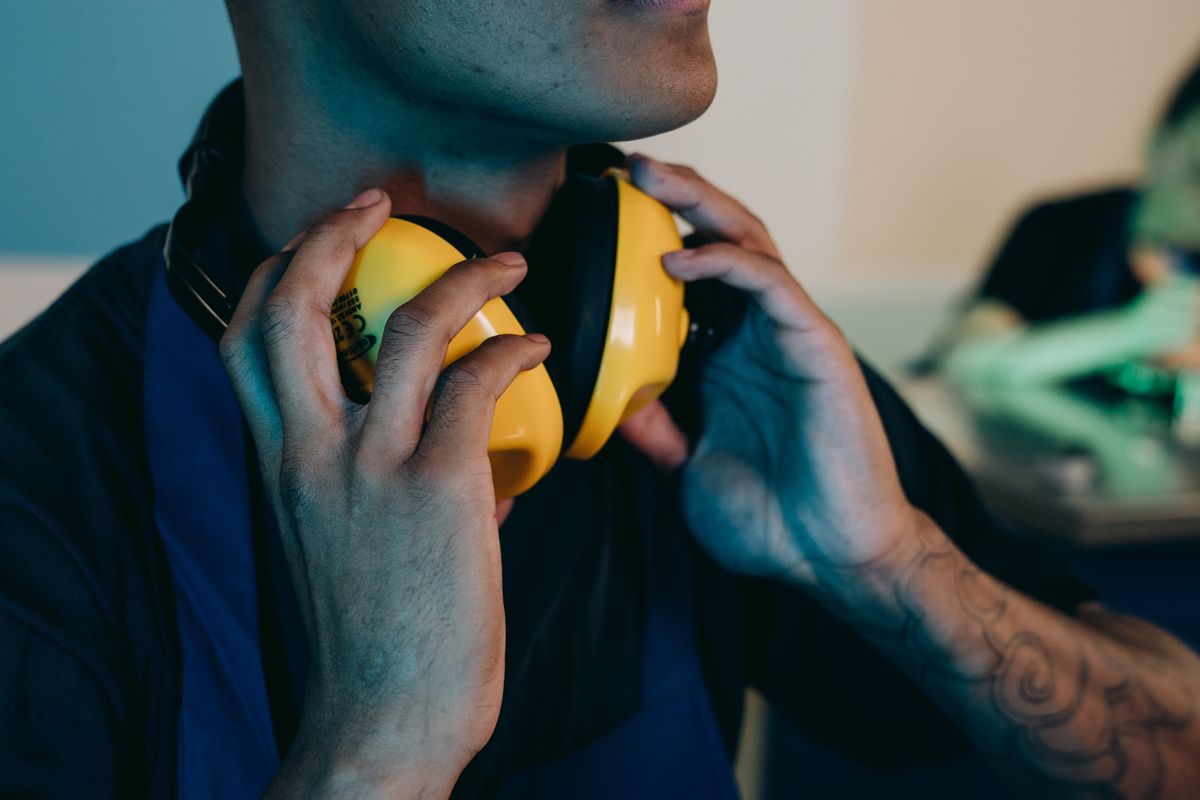
Describe how instructions, warnings, and conversations occur during the task. NIOSH identifies communication needs as a factor in selecting hearing protection. Ask about supported communication arrangements that maintain protection and awareness. Do not make a habit of lifting one earmuff whenever someone speaks in the noisy area. Agree where routine conversations can happen more quietly when practical. For a worked example, a team may brief the task before equipment starts and use the workplace's approved signals while it runs. The arrangement must fit the actual safety rules and should be developed with the responsible personnel.
Keep the program responsive
Report changes in tasks, equipment, fit, or symptoms through the workplace's health and safety route. Attend the hearing checks and training required by the program, and ask for results to be explained clearly. If symptoms arise, seek clinical assessment rather than assuming the workplace test alone provides treatment. Revisit protection when other equipment or the task changes. A good noise-control plan is understandable to workers and reviewed when conditions change. The practical goal is reduced exposure, suitable fit, and reliable communication as part of normal work, with responsibility shared through an organized safety program.
Sources & further reading
Source links support the factual context. Practical examples and suggested workflows are original editorial guidance. Sources checked October 5, 2026.
Spotted something we should correct? Send a correction. Read our editorial policy.